

A Tesla in winter works well once you know a few simple tricks. The usual trouble spots are frozen door handles and frameless windows, a charge cable stuck in the port, wipers frozen to the glass, the wrong tyres and road salt eating into the brakes and underbody. Preconditioning, the right settings and an autumn check solve most of it.
Below we cover what Tesla recommends in its manuals and what a Tesla in winter most often needs at our workshop. Battery, charging and range have their own article, Tesla battery in winter; here we focus on the body, wheels and mechanics.
Tesla in winter: doors and frameless windows
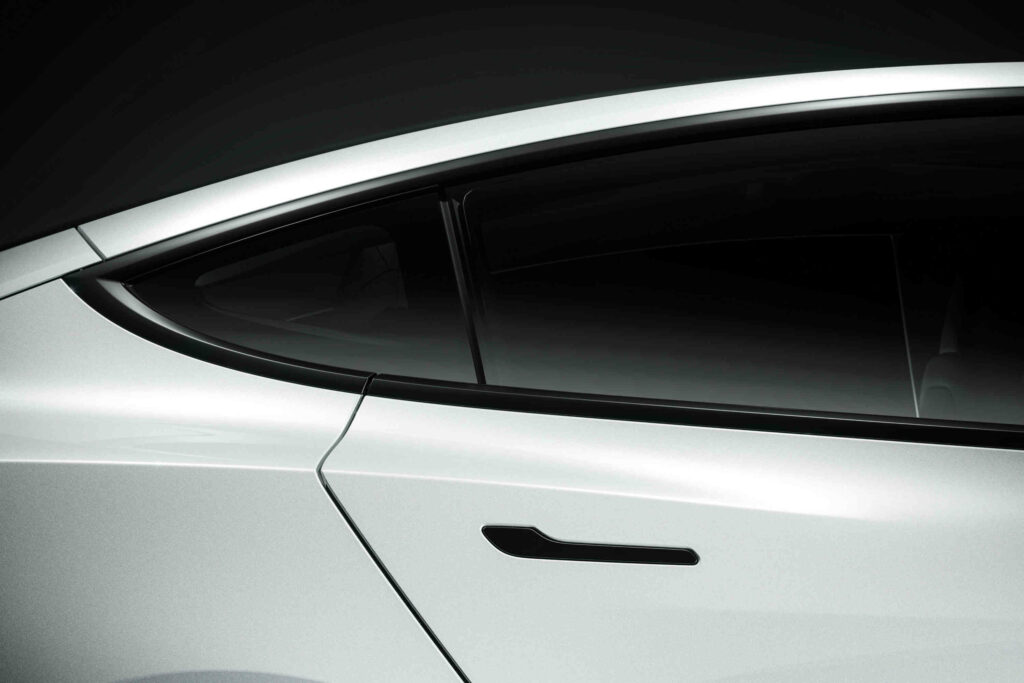
Model 3, Model Y and Model S have frameless side windows. Opening the door drops the glass slightly to clear the seal; closing raises it again. If the glass is frozen to the seal, the door may not open or the seal can be damaged. Tesla’s owner’s manual says that in cold weather Model 3 and Model Y slightly adjust the window position so a door with a frozen window opens more easily.
The flush door handles can freeze too. For black handles, Tesla’s guide says to press the front part firmly so that it rocks slightly inward and breaks the ice, then press the rear part as usual. A silver handle can be tapped with the bottom of your fist around its edge. Do not use tools. Full instructions are on Tesla’s page on removing ice from the door handle.
Preconditioning, mirrors and wipers
When a Tesla in winter is parked outside, the simplest protection against ice is to warm the car up before driving. Defrost Car in the app (Climate > Defrost Car) melts snow and ice on the windscreen, windows, mirrors and charge port and warms the battery when needed. Tesla recommends starting the climate 30–45 minutes before departure.
If you expect ice, turn off mirror auto-fold when parking (Controls > Mirrors > Mirror Auto-Fold) so the mirror motor does not fight the ice. For the wipers, Controls > Service > Wiper Service Mode lifts the blades off the glass so they thaw with the windscreen. Some cars also have a wiper defroster.
Tesla’s maintenance schedule calls for new wiper blades once a year. Before a Tesla in winter meets its first snow, do this together with switching to frost-proof washer fluid, because a worn blade streaks the glass right in front of the forward cameras.
Charge port and a frozen cable
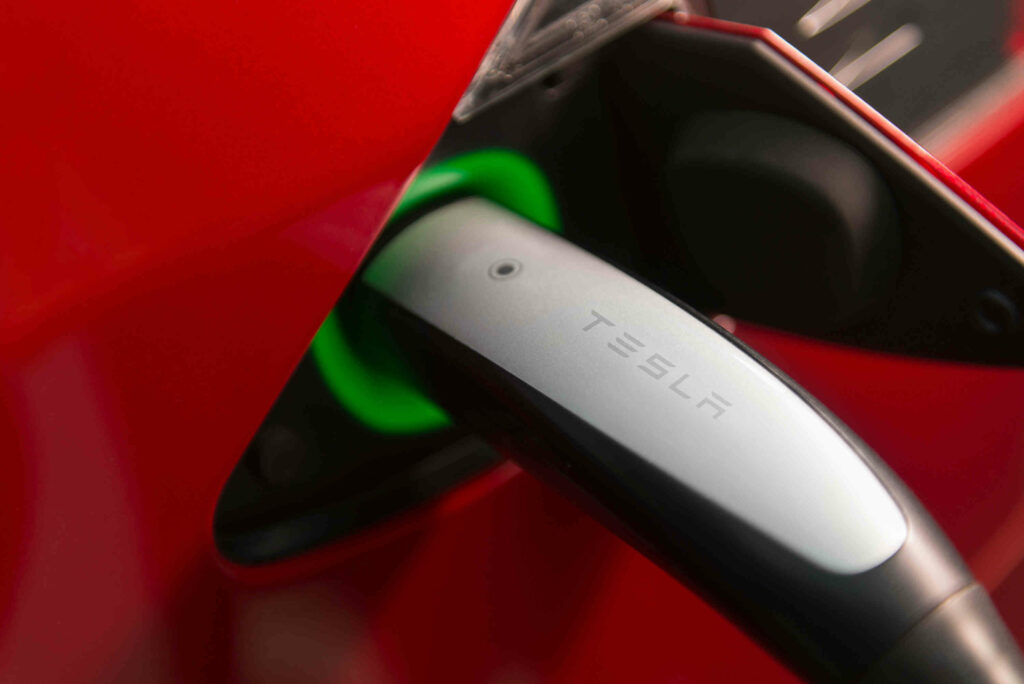
In hard frost the charge port latch can freeze: the cable gets stuck in the port or will not go in. Tesla’s manual says Defrost Car helps here too. Some cars also have an inlet heater (Controls > Service > Inlet Heater); whether yours has one depends on model, year and market. If that fails, the cable can be released manually; the owner’s manual for your model shows where the manual release is.
Do not yank the cable out by force, as you can break the latch or damage the port contacts. If the port freezes repeatedly, or a Tesla in winter will not start charging even after warming up, the cause may be in the port or the charging electronics, and needs diagnostics.
Tyres: studded or studless
In Estonia winter tyres are compulsory from 1 December to 1 March. Studded tyres are allowed from 15 October to 31 March, and from 1 October to 30 April in winter road conditions. Studless winter tyres must carry the three-peak mountain and snowflake symbol, and a winter tyre needs more than 3 mm of remaining tread. The rules are in a Transpordiamet announcement.
A Tesla is a heavy car with instant torque, so how well a Tesla in winter holds the road depends on its tyres even more than with a lighter car. Studded tyres grip better on ice, while studless tyres are quieter and suit cleared city streets. Neither replaces a gentle right foot: on slippery roads the softer Chill acceleration mode also helps.
A Tesla in winter also loses tyre pressure as it gets colder, so check it after the tyre change and the first frosts against the label on the driver’s door pillar. Tesla recommends rotating the tyres every 10,000 km or when tread depths differ by 1.5 mm. If the inner edges wear faster, have the wheel angles checked on a 3D alignment rig.
Road salt, brakes and underbody
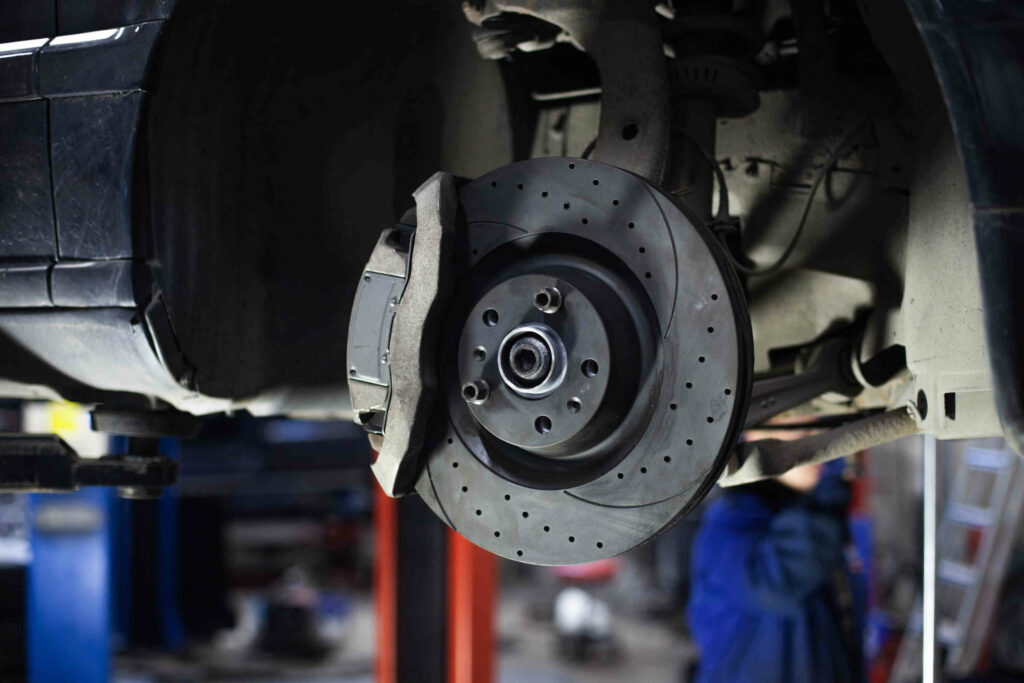
A Tesla in winter uses its friction brakes very little, because regenerative braking does most of the work. On salted roads that means rusty discs and sticking calipers. Tesla recommends cleaning and lubricating the calipers every year or every 20,000 km where roads are salted. We cover this in our article on Tesla brakes.
Tesla’s owner’s manual advises rinsing road salt off the underside, wheel arches and brakes, as corrosion damage may not be covered by the warranty. On older Model S and Model X cars we also inspect the underside of the battery pack: we have seen a Model S 85 pack where salt and time had corroded the aluminium and water had reached the BMS board.
A pre-winter check at the workshop
We recommend an inspection before the first frost. A pre-winter check covers the areas where a Tesla in winter most often runs into trouble:
- cleaning and lubricating the brake calipers, condition of discs and pads
- tread depth, tyre pressures and 3D wheel alignment if needed
- wiper blades, washer fluid and lights
- door handles and window seals
- 12 V battery condition and stored fault codes
- underbody, suspension and battery underside protection
Our price list starts at €60 for Tesla maintenance, €80 for brake pad and disc work and €100 for 3D wheel alignment. These are starting prices and do not include VAT. See our Tesla maintenance page for details.
Frequently asked questions
Do Tesla doors freeze shut in winter?
They can, especially when a Tesla in winter sits out in a frost that follows a thaw. Both the handles and the frameless windows can freeze. Preconditioning with Defrost Car 30–45 minutes before driving helps most. Never pry a frozen handle with a tool; break the ice as Tesla describes, by pressing the front of the handle.
Are studded or studless tyres better for a Tesla?
It depends on your roads. On icy country roads studded tyres grip better; in the city and on well-kept main roads studless tyres are quieter. Either way, the load and speed ratings must meet the car’s requirements and the tread must be deeper than 3 mm.
What should I do if the charging cable will not come out?
Start Defrost Car in the app and wait a few minutes. If your car has an inlet heater, switch it on under Controls > Service > Inlet Heater. If the cable is still stuck, use the manual release described in the owner’s manual. Do not pull the cable by force, as that can break the latch.
Does a Tesla in winter need separate maintenance?
Tesla does not prescribe a separate winter service, but because of salted roads it recommends servicing the brake calipers once a year. In our experience the tyres, wipers, 12 V battery and suspension are also worth an autumn check, so the first frosty morning brings no surprises.
To make sure your Tesla in winter holds no surprises, book a pre-winter check on +372 5851 0695 or at info@servicemode.ee. We are at Tähnase 1 in Peetri, about five minutes from Tallinn Airport, open Monday to Friday 9:00–18:00. All contact details are on our contact page.