

Tesla collision repair differs from ordinary bodywork in three ways: the body mixes aluminium with steels of different strength, there is a high-voltage battery in the floor, and cameras and sensors must be checked after the repair. After an accident, first make sure the high-voltage system is safe, then document the damage and notify your insurer. We handle the claim directly with the insurer, so the billing runs between the workshop and the insurance company.
Even a minor impact can hide more on a Tesla than you see at first glance. The bumper may carry parking sensors, the front fender repeaters hold the side cameras, and a hit to the underbody can reach the battery enclosure. So Tesla collision repair is not just pulling a dent and painting: before the repair, the parts you cannot see straight away need checking too.
Aluminium, steel and castings
According to Tesla’s collision repair manual, the body is made of different grades of aluminium and steel, up to ultra high-strength steel. The Model S and Model X bodies are mainly aluminium, while the Model 3 and Model Y combine aluminium and steel. Each material needs its own methods. Ultra high-strength steel parts generally must not be repaired under the manual; they are replaced.
An aluminium part may be straightened cold, but if it has a crease or kink it must be replaced. The rear underbody of the Model Y is a large aluminium casting, and Tesla has written separate procedures for repairing it. That is why Tesla collision repair starts with finding out what material the damaged part is made of and what the manufacturer specifies for it.
After a heavier impact we also measure the body geometry. Tesla’s collision repair manual gives dimensional specifications for checking that the mounting points for the suspension and other assemblies are where they should be. If one of them has moved, new outer panels will not help: the car will not drive straight and new tyres will wear quickly and unevenly.
High-voltage safety after an accident
For example, according to Tesla’s Model 3 emergency response guide, when the airbags deploy, a pyrotechnic fuse fires at the same moment and shuts off high voltage in all components and cables outside the battery. The cells, however, still hold their energy. If a collision has damaged the battery, the car should be kept in an open area at least 15 metres from anything else, because the battery could reignite later.
The pyro fuse is single-use and must be replaced once it has fired. If the airbags deployed, the restraint system parts must be replaced too. Orange cables carry high voltage and must always be treated as live. Before Tesla collision repair begins, we read the high-voltage system alerts with Toolbox 3 and inspect the underside of the battery. Read more about the pyro fuse and contactors in our article on Tesla contactor replacement.
How Tesla collision repair works with insurance
With an insurance claim, the car usually goes from accident to finished repair in six steps:
- At the scene: if anyone is injured, call 112. If no one is hurt, the drivers can record the accident themselves, take photos and draw a sketch.
- Accident report: fill in the accident notice on your phone at avarii.lkf.ee or on paper and notify your insurer.
- Transport: if the car cannot be driven, we bring it to the workshop.
- Inspection and estimate: we check the high-voltage system, assess the damage and send a repair estimate to the insurer.
- Repair: body and paint work, parts replacement, camera calibration and clearing fault codes.
- Handover: final check, alignment if needed, and the insurer pays the workshop directly.
According to the Estonian Traffic Insurance Fund (LKF), police and an ambulance must be called at once if anyone is injured. If no one was hurt, the drivers can record what happened themselves and submit a claim to the insurer. The insurer assesses the reasonable repair costs and gives the workshop a letter of guarantee that it will pay for the repair on the claimant’s behalf.
Insurers and the details you need
We handle claims directly with insurers such as If, Swedbank P&C, PZU, ERGO, Gjensidige, Compensa, BTA, Salva, Inges and LHV. Under comprehensive (kasko) cover you usually pay only your policy deductible. If another driver was at fault, their motor third-party liability insurance pays. There is more on our claims handling page.
To start Tesla collision repair through insurance, we need the accident notice or claim number, your policy details, photos of the damage and the scene, and the other party’s details if there is one. If the police dealt with the accident, include that information as well. The more precise the details, the fewer questions the insurer will have later.
Paint, cameras and sensors after the repair
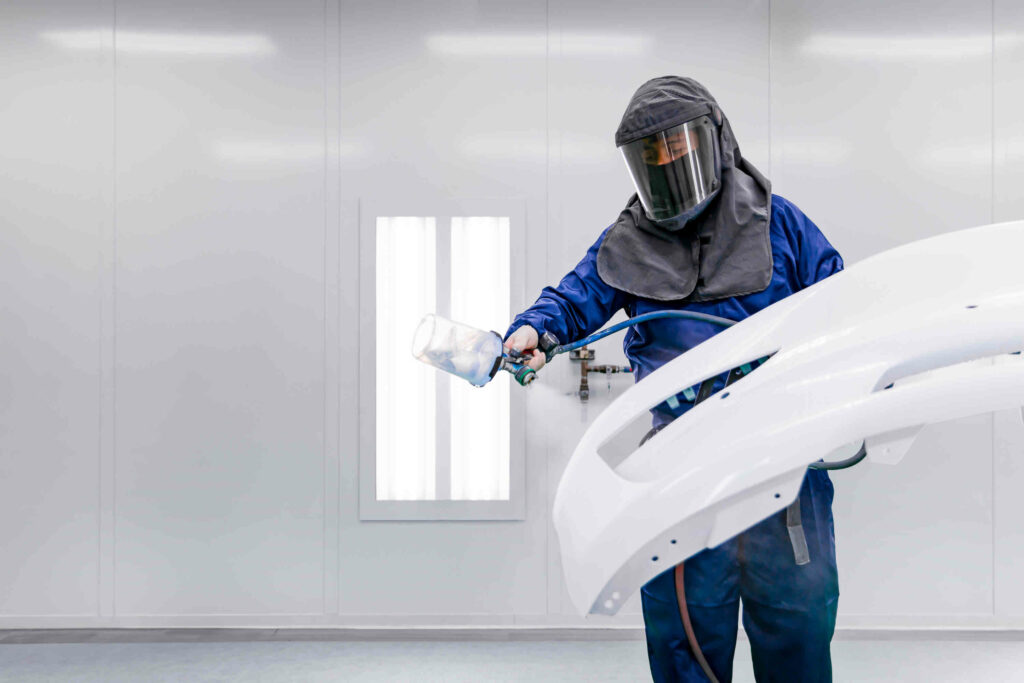
Paint is the most visible part of Tesla collision repair. It is mixed to the car’s paint code and blended into the neighbouring panels so the repaired area does not stand out. After replacing a bumper, fender or windshield, the cameras must be checked too. Tesla’s instructions say calibration must be cleared if a camera has moved from its position, and the car then recalibrates the cameras while driving.
Finally, we read the alerts from all systems with Toolbox 3 and clear those caused by the accident. If the impact hit a wheel or the suspension, a 3D wheel alignment is needed as well, because even a slightly bent arm changes the wheel angles and wears the tyres. That way Tesla collision repair ends with a car that is right both outside and underneath.
Frequently asked questions
Can I drive my Tesla after an accident?
If the airbags deployed, the car shuts off high voltage and will only drive again after repair, on a Model 3 for example once the pyro fuse has been replaced. If it does drive but shows a high-voltage or battery warning, the underbody took a hard hit, or there is smoke, hissing or heat, do not drive it. Call a tow truck and keep away from the car. If in doubt, call us and describe what the screen shows, and we will tell you whether the car can be driven to the workshop.
Can I choose where my Tesla is repaired?
The insurer may ask you to choose a workshop from its partners. If you want us to do your Tesla collision repair, say so when you file the claim or call the insurer. If another driver was at fault, the claim goes to their insurer and you agree it with them. We work with many insurers operating in Estonia.
How much does Tesla collision repair cost?
Work on a single body panel starts from €48 and welding from €100, prices excluding VAT. The total for an accident repair depends on the damage and is set out in the estimate. With an insurance claim, the insurer assesses the repair costs and you usually pay only the deductible.
Should the battery be checked after an accident?
Definitely, if the impact hit the underbody or the car took a hard side impact. Tesla’s procedures call for a visual inspection of the underbody and battery whenever the car is on a lift or the owner suspects damage. So after such a hit, our Tesla collision repair includes inspecting the battery enclosure and reading the battery management system alerts.
If your Tesla has been damaged in an accident, call +372 5851 0695 or email info@servicemode.ee. If needed, we bring the car to the workshop, assess the damage and handle the claim directly with the insurer. Read more about our bodywork service or book a time via our contact page.