

A Tesla BMS error means the battery management system has detected something abnormal in how the high-voltage battery is working. Some alerts let you keep driving and book service at your convenience, others tell you not to charge the car or warn that it may not restart. What matters is the exact code, not just the message on the screen.
In this article we explain what the BMS does, when a Tesla BMS error is serious, what the alerts described in Tesla’s owner’s manual mean and why clearing a fault code is not a repair. We only describe codes whose meaning is documented in Tesla’s own manual.
What the BMS does in a Tesla battery
The battery management system is the brain of the battery. According to Battery University, a BMS is there to keep the battery safe and long-lived, report its state of charge and state of health, warn about issues such as high temperature or cell imbalance, and disconnect the battery when limits are exceeded or a failure occurs. Tesla’s alert descriptions show that the BMS also constantly compares the pack voltage with individual cell measurements and monitors the electrical isolation of the high-voltage system from the car body.
The contactors, heavy-duty relays, connect and disconnect the battery. If the BMS measurements are wrong or the BMS itself has failed, the car may show the wrong state of charge, limit charging or refuse to drive. That is why the percentage on the screen alone is not enough.
How Tesla alert codes are built
Every Tesla BMS error has an alert name made up of a system abbreviation, a letter and a number, for example BMS_a079. The prefix shows which system raised the message: BMS is the battery management system, and other systems have their own abbreviations. The alert list in Tesla’s owner’s manual contains ten BMS alerts, all with the letter a. The manual does not explain what the letter means.
Searches for a Tesla BMS error also turn up codes such as BMS_f071 or BMS_u008. Tesla’s owner’s manual does not describe them and there is a lot of guesswork about them online, so we will not guess their meaning here. Codes like these have to be read with diagnostic equipment together with the car’s other data, because one code on its own does not tell you which part has failed.
Tesla BMS error: alert groups according to the manual
When a Tesla BMS error appears on the screen, the code tells you which group it belongs to. The alerts described in Tesla’s manual fall into four groups by consequence:
- Isolation alerts (BMS_a027, BMS_a035, BMS_a123, BMS_a151): the electrical isolation of the high-voltage system from the body has dropped below the acceptable level. The car may not restart, and with BMS_a123 and BMS_a151 you should not charge it.
- Performance and charging limits (BMS_a067, BMS_a068, BMS_a074, BMS_a079): the car has detected a condition inside the battery. You can drive, but range, acceleration or charging is limited, and with BMS_a074 and BMS_a079 the car will not charge above 50 percent.
- Measurement mismatch (BMS_a059): the pack voltage does not match the value expected from individual cell measurements. You can drive, but if the alert persists, book service.
- Low charge (BMS_a069): usually the battery is simply low and the fix is to charge it. If the message keeps coming back even though the screen shows at least 5 percent, service is needed.
The manual also gives practical advice. With BMS_a067 and BMS_a068, keep the charge at 30 percent or higher so that the range shown on the screen matches the battery’s actual charge. With BMS_a123 and BMS_a151, Tesla advises stopping using the car immediately and contacting Roadside Assistance if you notice unusual smells, sounds or visible damage near the battery.

When to act immediately
The most serious Tesla BMS error is an isolation alert. For safety, the high-voltage system is electrically isolated from the car body, and when that isolation drops, the car limits its functions. With BMS_a027 Tesla advises scheduling service immediately and not driving further until the car has been inspected, because it may not restart after the drive.
With charging and performance limits you can usually keep driving, but the fault will not go away by itself. Tesla warns that without service the maximum charge level and range may drop further. If BMS_a074 or BMS_a079 persists, bring the car in for diagnostics before the limit starts to affect daily use.
Why a reset is not a fix
Search suggestions also include “Tesla BMS reset”. A fault code can be cleared with diagnostic equipment, but the Tesla BMS error will not go away if the cause remains: when the BMS measures the same deviation again, the alert comes back. With an isolation fault or an internal battery problem, silencing the alert can be dangerous, because these are exactly the messages that protect the battery and people.
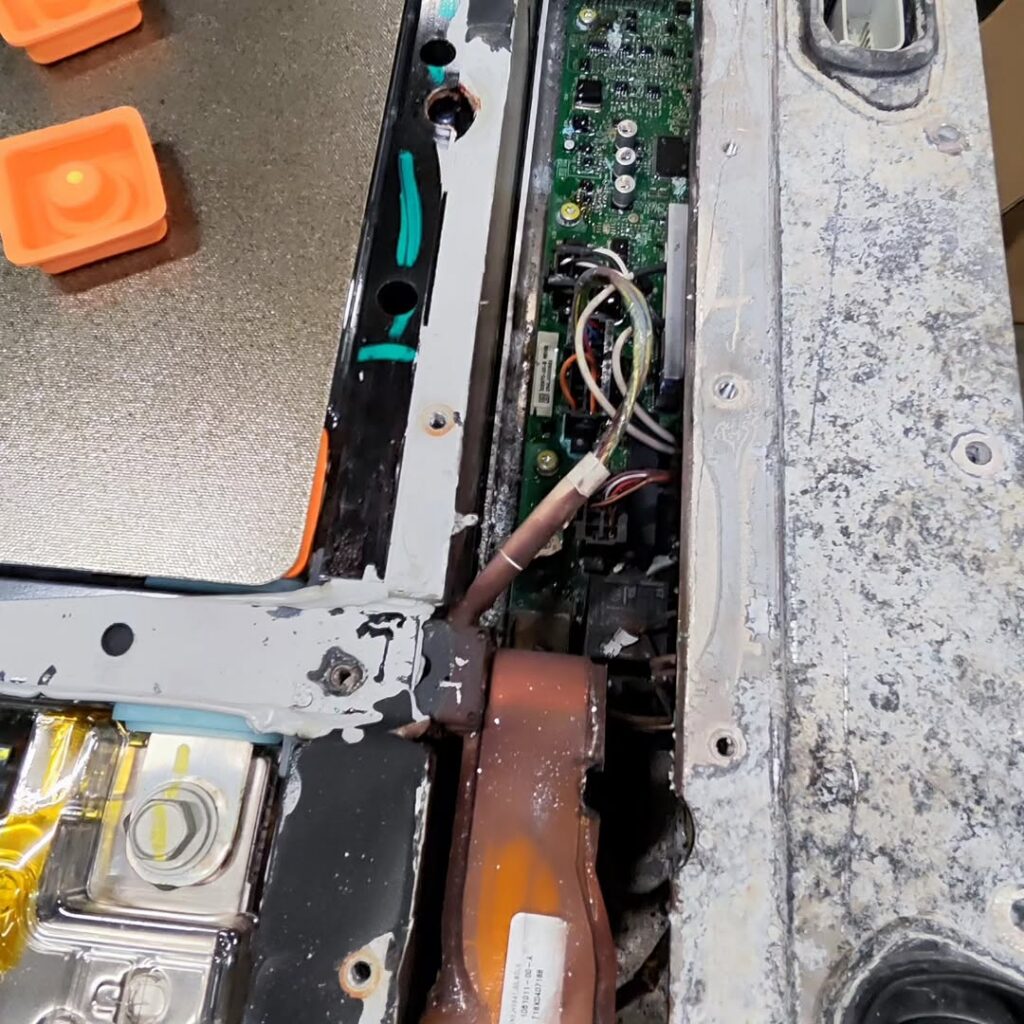
A Tesla Model S 85 that came to our workshop shows how misleading BMS data can be. The BMS reported a 95 percent state of charge, but the pack measured only about 50 V DC instead of roughly 400 V. Road salt and time had corroded the aluminium, water had got into the BMS board area, the BMS had failed and the contactors had burned and welded shut. No reset would have helped here.
How diagnostics work
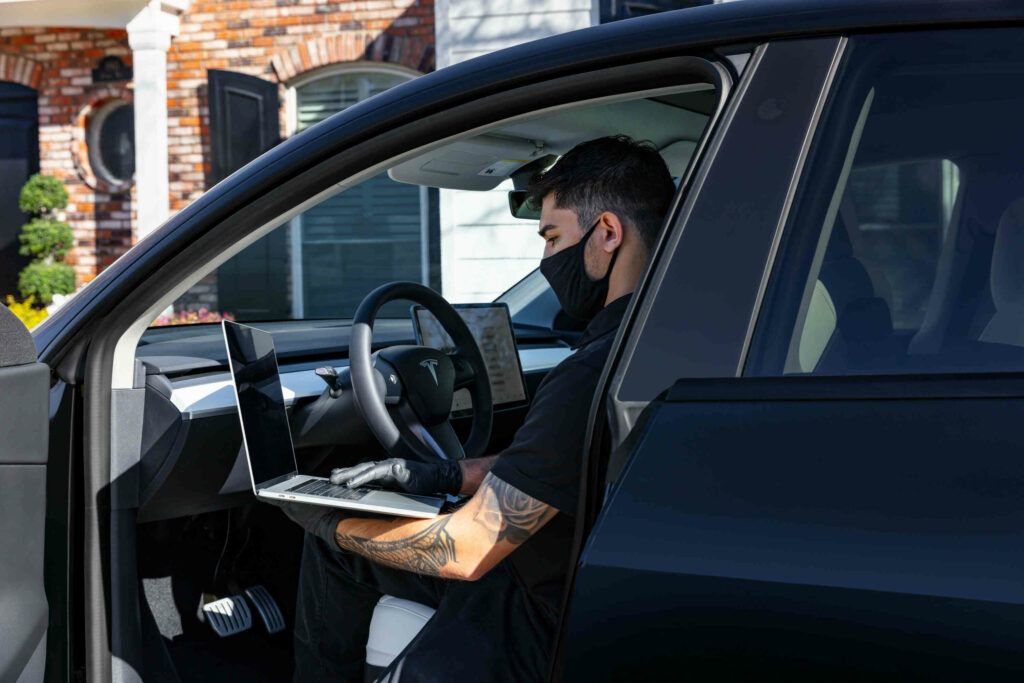
When a Tesla BMS error appears, the work starts with licensed Tesla Toolbox 3 diagnostic equipment. We read the fault codes and BMS data and find out whether the problem is in the battery itself or around it, for example in the charging system or wiring. If needed, we take further measurements. Reading and clearing fault codes starts from €150, as do diagnostics and electrical work, with VAT added.
After diagnosis we explain what caused the alert and what the options are: repairing a part, replacing it or repairing the battery. Read more about our diagnostics service, battery repair and the article Tesla contactor replacement: when the fuse and contactors need changing.
Frequently asked questions
What does BMS_a079 mean on a Tesla?
According to Tesla’s manual, the car has detected a condition inside the high-voltage battery that limits charging to 50 percent. You can drive, and the car will charge while the state of charge is below 50 percent, but charging will not start above that. If the alert persists, Tesla advises scheduling service, as otherwise the maximum charge level and range may drop further.
Does a Tesla BMS error go away after a reset?
The message may disappear, but the cause remains. When the BMS detects the same condition again, the alert returns. Clearing the code only makes sense once the fault has been found and fixed, for example after a failed part has been replaced.
Can I drive with a BMS alert?
It depends on the code: not every Tesla BMS error means you must stop. With BMS_a067, BMS_a068, BMS_a074 and BMS_a079 Tesla allows driving and advises booking service. With isolation alerts the car may not restart, with BMS_a123 and BMS_a151 you should not charge it, and with BMS_a027 Tesla advises not driving further until the car has been inspected.
Does a Tesla BMS error mean the battery needs replacing?
Not necessarily. The same Tesla BMS error can be caused by the BMS board, the contactors, moisture or a cell problem. Some faults can be repaired, others need bigger work. Diagnostics gives the answer, not just the code on the screen.
If a Tesla BMS error has appeared on your screen, do not wait until it turns into a driving restriction. Book diagnostics: call +372 5851 0695, write to info@servicemode.ee or see our contact details. We are open Monday to Friday from 9:00 to 18:00 at Tähnase 1, Peetri, Rae vald.