

EV battery repair is not banned in Finland or in Estonia. In July 2026 Finnish authorities published guidance on handling traction batteries, and many took it to mean that independent workshops could no longer repair packs. In September the Finnish Permit and Supervision Agency LVV (Lupa- ja valvontavirasto) clarified that neither the law nor the guidance prevents the repair or reuse of used batteries.
This is not legal advice. We describe what the authorities wrote and link to the sources. At the end we explain how EV battery repair works at our workshop in Peetri and why every battery job starts with diagnostics, not guesswork.
What Finland’s 2026 battery guidance says
The guidance, titled “Ohje ajovoima-akkujen käsittelyyn ja uudelleenkäyttöön”, was prepared jointly by LVV, the Finnish Safety and Chemicals Agency Tukes and the Transport and Communications Agency Traficom. It was published in July 2026 and updated on 1 September. It is aimed at automotive and battery businesses and compiles the requirements of the EU Battery Regulation (EU) 2023/1542. The authorities say it contains no new national rules.
The key part of the guidance is its definitions. They decide whether an EV battery repair counts as ordinary repair or as work that carries the obligations of a producer and a waste operator:
- Repair: the owner brings the car’s battery in for repair, the pack is not fully dismantled, parts equivalent to the originals are replaced, the battery stays in the same vehicle and the work follows the manufacturer’s instructions.
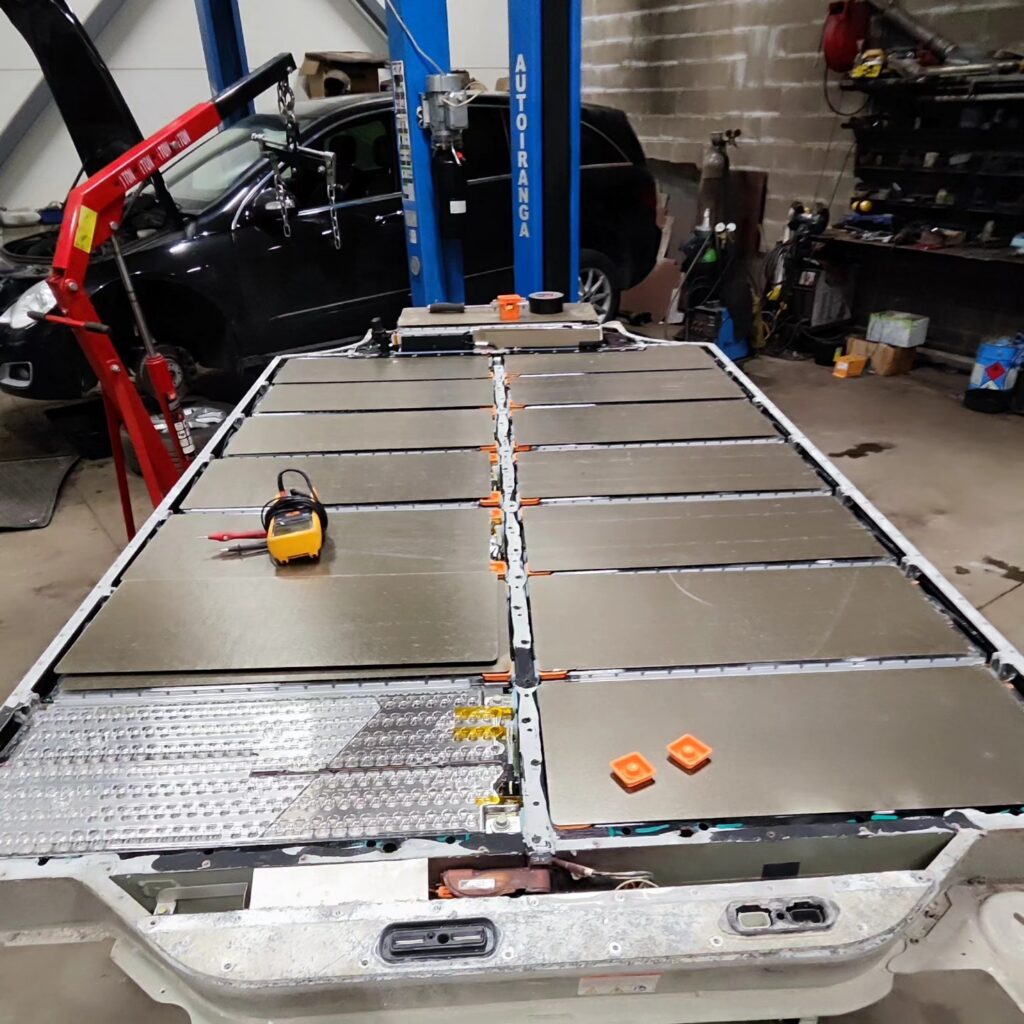
- Remanufacturing: the pack is dismantled to module or cell level and some of them are replaced. In the guidance’s examples, work done without the manufacturer’s instructions also counts as preparation for reuse or remanufacturing.
- Waste battery: a battery that its holder discards or is required to discard, for example when the car is taken for scrapping or when the battery’s safety is uncertain after an accident or fire.
- Preparation for reuse: restoring a waste battery is treated as waste processing and requires an environmental permit, an end-of-waste decision and an agreement with a producer responsibility organisation.
A remanufacturer becomes a producer under the regulation and is responsible for the battery being compliant and safe. By definition, remanufacturing restores the battery’s capacity to at least 90 percent of its original rated capacity. The guidance also notes that anyone repairing a high-voltage battery must be trained in electrical safety and know the electrical system of that model.
Why the guidance caused an outcry in Finland
The guidance was read as making independent EV battery repair difficult. For example, technically sound batteries from scrapped cars, classified as waste, could no longer be used as spare parts. Tekniikan Maailma reported fears that battery work would move to brand dealerships, which are more likely to replace an entire traction battery that may be worth tens of thousands of euros.
The worry was real: if every EV battery repair ends with a new pack, owning an older electric car becomes expensive and risky. A citizens’ initiative on the safe repair of electric cars, started by experts in the field, collected more than 74,000 signatures in a few days, according to Tekniikan Maailma. In Finland an initiative goes to parliament if it gathers 50,000 signatures within six months.
What LVV clarified in September
On 1 September 2026 LVV stated that the guidance adds no new requirements but explains existing law, and that the law does not prevent the repair or reuse of used batteries. On 8 September LVV, Tukes and Traficom published questions and answers under the heading “Sähköautojen akkuja voi edelleen korjata”, meaning that EV batteries can still be repaired. The key messages are:
- EV batteries may still be serviced, repaired and reused, and workshops can continue to repair electric cars and their batteries.
- A workshop does not need an environmental permit for repairs that use new or used parts.
- A used battery can be sold, but not as intact or in working order if the system has a suspected or confirmed defect.
- A battery becomes waste when its holder hands it in for separate waste collection or takes the car for scrapping. Buying and selling used products is not waste handling.
The authorities added that vehicle legislation requires manufacturers to make repair and maintenance information available to all repairers without restriction or discrimination. They also stressed that Finland has not imposed requirements stricter than EU law. In short: EV battery repair is allowed when it is done competently, safely and according to the manufacturer’s instructions.
What this means for Finnish Tesla owners
If the car is in use and the EV battery repair is carried out in the same car according to the manufacturer’s instructions, the guidance’s own definitions treat it as repair, and the battery is not waste. The line is crossed when the battery is taken out of use, dismantled to cell level or fitted with parts from a waste battery. Then the company doing the work takes on the obligations of a producer and a waste operator.
The examples in the guidance assume reuse within Finland. The EU Battery Regulation also applies in Estonia, however, so its concepts, such as remanufacturing and waste battery, are the same here. For a Finnish owner the practical question is simple: can the fault be fixed without taking the battery out of use? Only diagnostics can answer that.
EV battery repair in Estonia: how we work
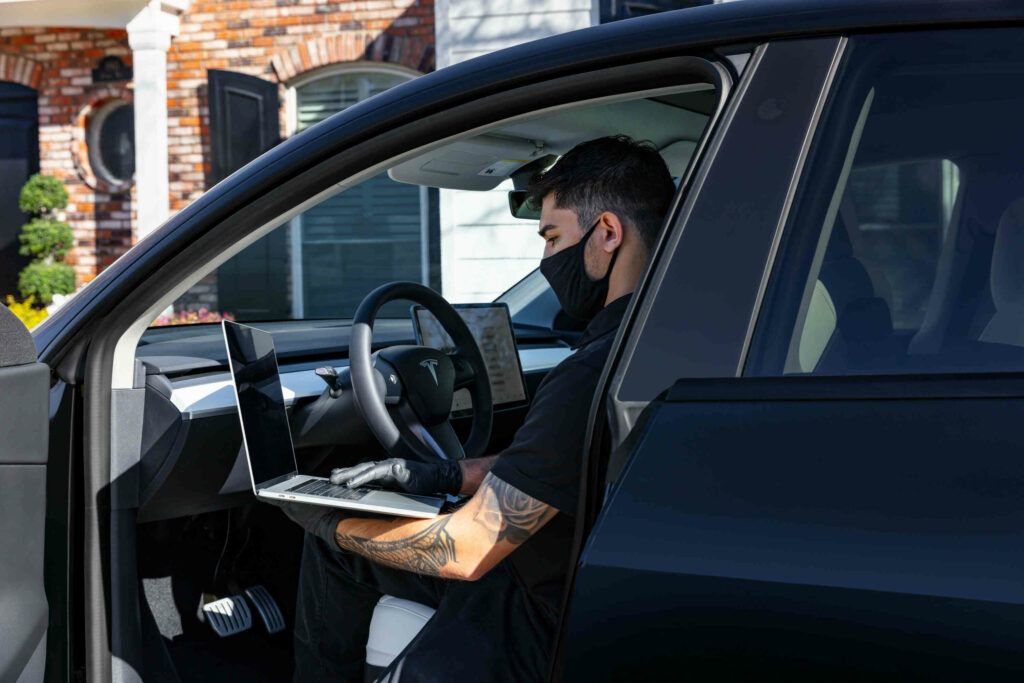
Our workshop is in Peetri on the edge of Tallinn, about five minutes from the airport. From Finland you can bring the car on the ferry from Helsinki to Tallinn, and if needed we can help arrange transport of the car to the workshop. With us, EV battery repair always starts with diagnostics on licensed Tesla Toolbox 3 equipment: we read the fault codes and battery management system (BMS) data and find out whether the problem is in the battery itself or around it.
A good example is a Tesla Model S 85 that came to our workshop: the BMS reported a 95 percent state of charge, but the pack measured only about 50 V DC instead of roughly 400 V. Road salt and time had corroded the aluminium, water had got into the BMS board area, the BMS had failed and the contactors had burned and welded shut.
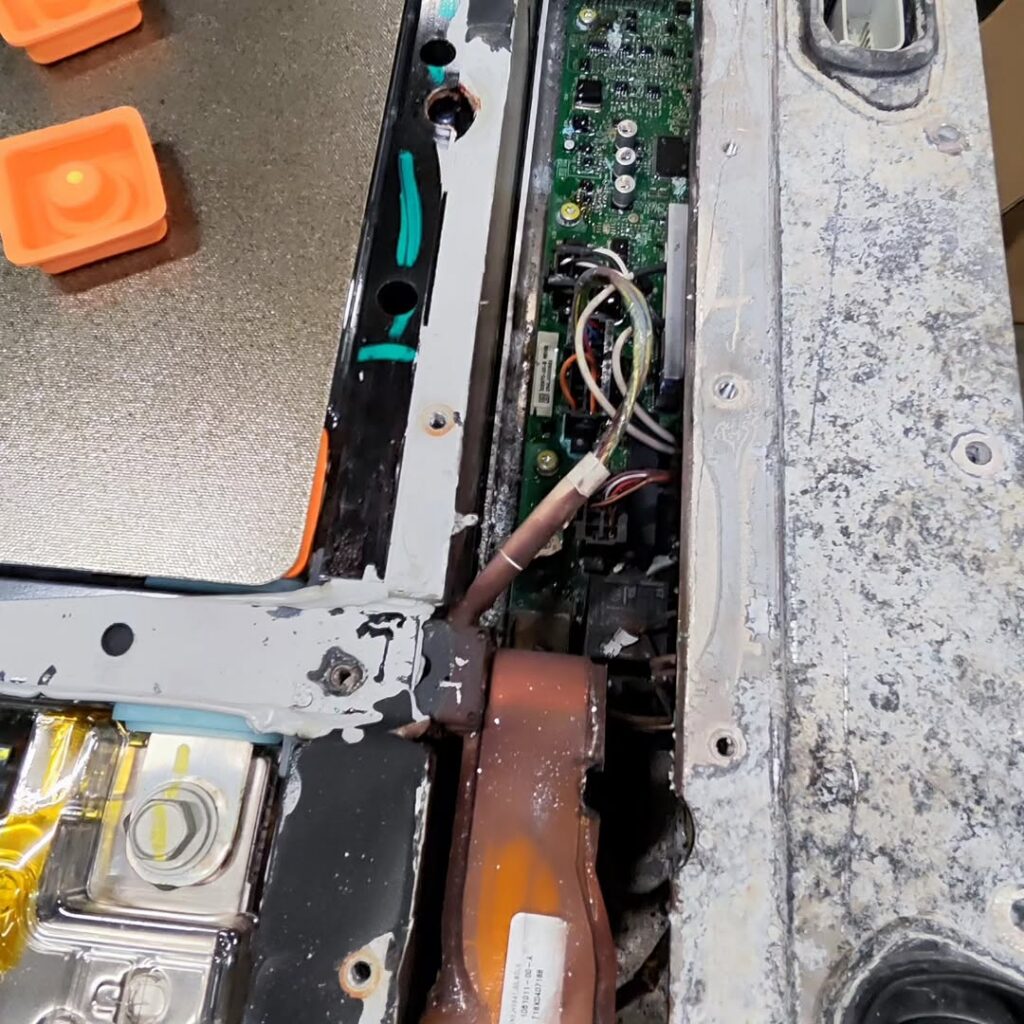
A case like this shows why EV battery repair starts with measurements: a “dead battery” can be caused by moisture, the BMS or the contactors rather than all the cells. After diagnosis we explain to the owner what is broken and what the options are. The work follows Tesla Service protocols and uses original parts. Read more about our battery repair service, electrical work and the article Tesla battery repair: when to repair and when to replace.
Frequently asked questions
Is EV battery repair banned in Finland?
No. On 1 and 8 September 2026 LVV confirmed that neither the law nor the authorities’ guidance bans the repair or reuse of used batteries. The guidance brings together the requirements of the EU Battery Regulation and distinguishes between repair, remanufacturing and preparing a waste battery for reuse. Each activity carries its own obligations.
Can a Finnish-registered car have its battery repaired in Estonia?
The Finnish guidance is aimed at businesses operating in Finland, and its examples cover reuse within Finland. LVV’s questions and answers do not specifically address EV battery repair abroad. The EU Battery Regulation applies in both countries. If you are unsure about your situation, ask LVV or Traficom directly; we can assess the car’s technical condition.
What is the difference between repair and remanufacturing?
Under the guidance, EV battery repair means work where the battery stays in the same car, is not fully dismantled and has parts equivalent to the originals replaced according to the manufacturer’s instructions. Remanufacturing means dismantling the pack to module or cell level and restoring capacity to at least 90 percent. The remanufacturer is responsible for the battery as its producer.
How much does EV battery repair cost?
We cannot quote an exact price before diagnosis, because the same symptom can hide very different faults. Our diagnostics and electrical work start from €150, as does reading and clearing fault codes, with VAT added on top. The scope and cost of the EV battery repair become clear after diagnosis.
If your Tesla shows a battery-related alert or its range has suddenly dropped, book diagnostics. Call +372 5851 0695, write to info@servicemode.ee or see our contact details. We are open Monday to Friday from 9:00 to 18:00 at Tähnase 1, Peetri, Rae vald.